Stage 2 - Ada Tree to Moe 78k - science, I salute thee
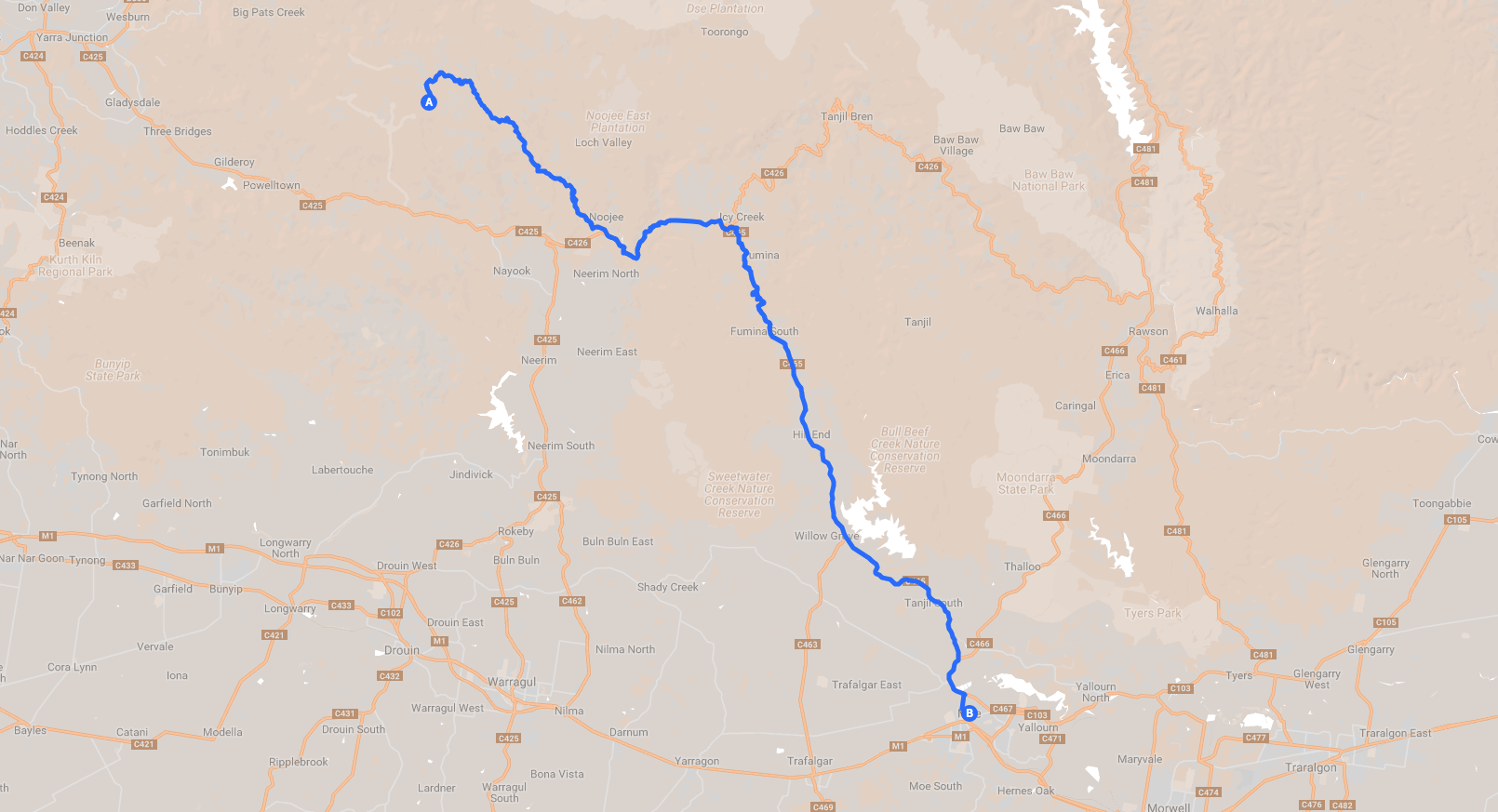
Stage 2: from the great forests to coal country.
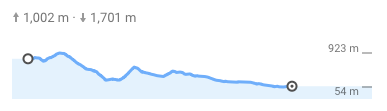
Stage 2 profile: I am sure that hill out of Noojee one third in is not shown steep enough. It’s a killer.
Bird song. With little flecks of light filtering through my sassafras canopy. Such a joyful way to wake after the exhaustion and vanilla slice inspired sleep of life. What a day to be alive! So far away from those monsters in da house.
I was looking forward to a peaceful communion at the Ada Tree, so I got up and packed up quickly. I drank the rest of my bottle and refilled. Running a bit low. So thirsty. I said goodbye to the secret camp and ground back up the hill. I am sure no one has been here in yonks. I love those camps. I might have let out a little tiger roar. Because I survived the hill yesterday and was on a mission to Canberra.
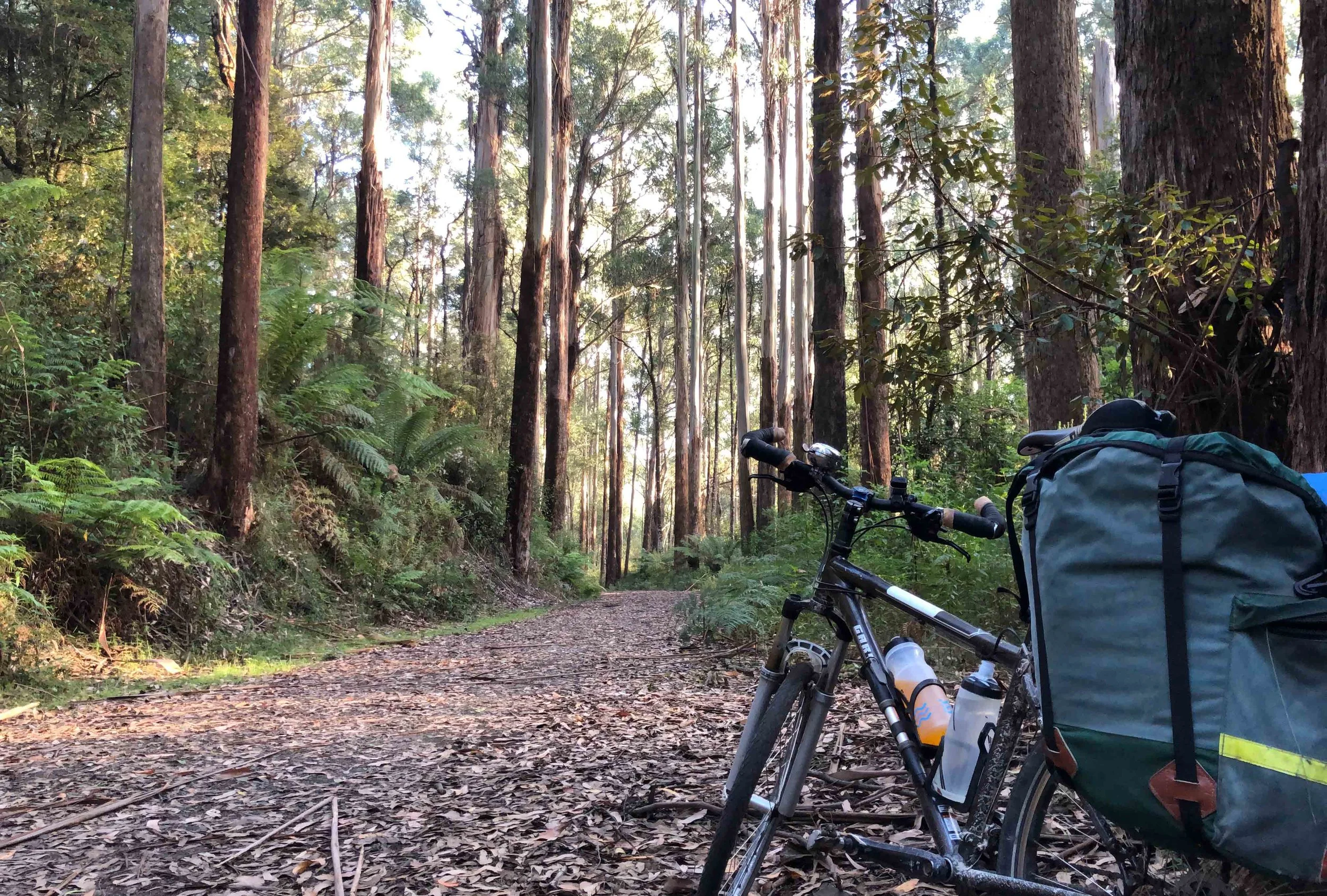
Forest tracks on the way to the Ada Tree.
Nearly all the forest on top of the ranges has been logged at some point, and the loggers have put little tracks and tramways all over the place. The road are usually pretty good quality too, cause the loggers have to bring in big equipment. And once the annals of time has done it’s work, they make beautiful cycling tracks on soft beds of ash leaves. No sign of trucks. And so I had the loveliest little ride to the Ada Tree.
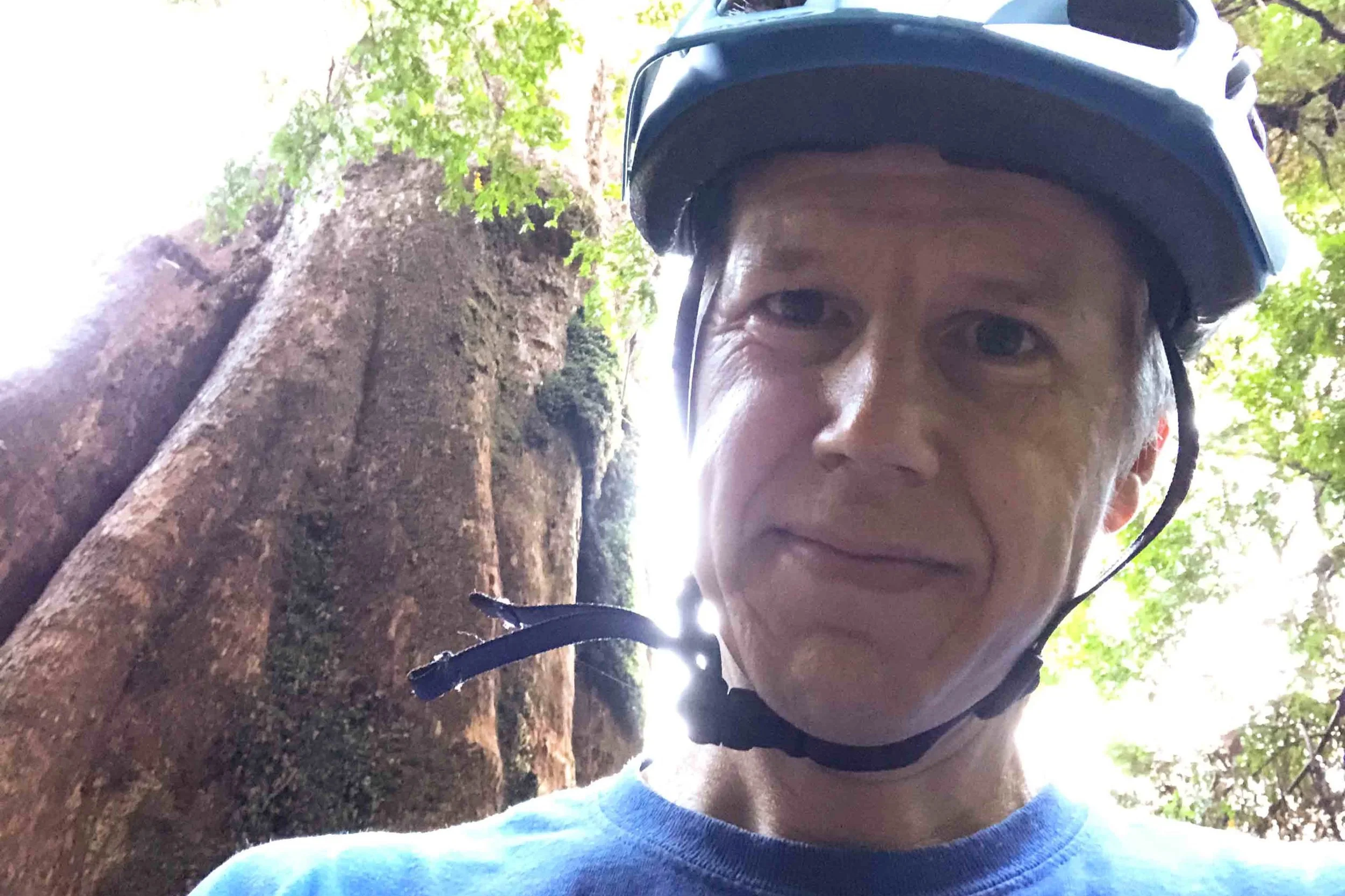
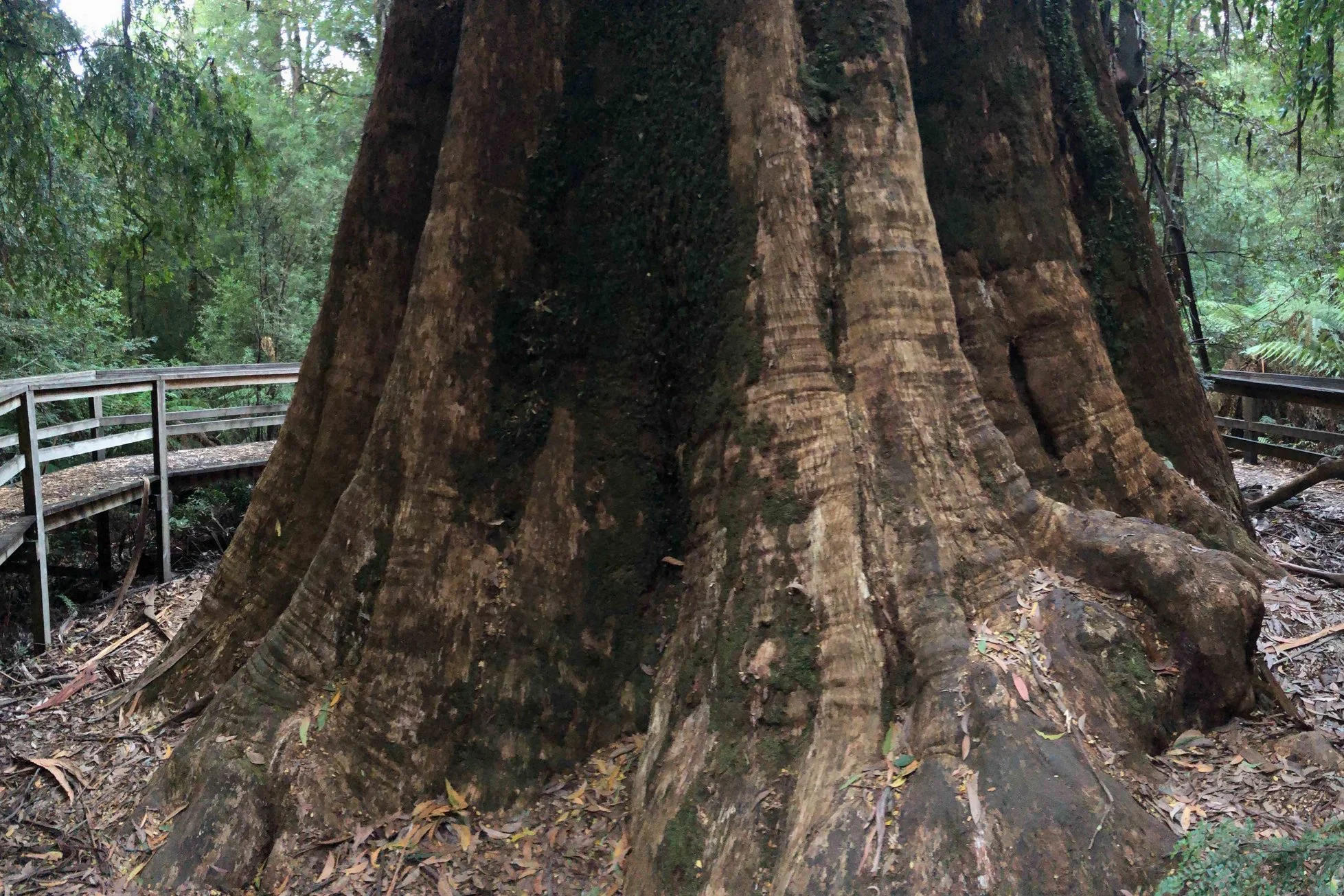
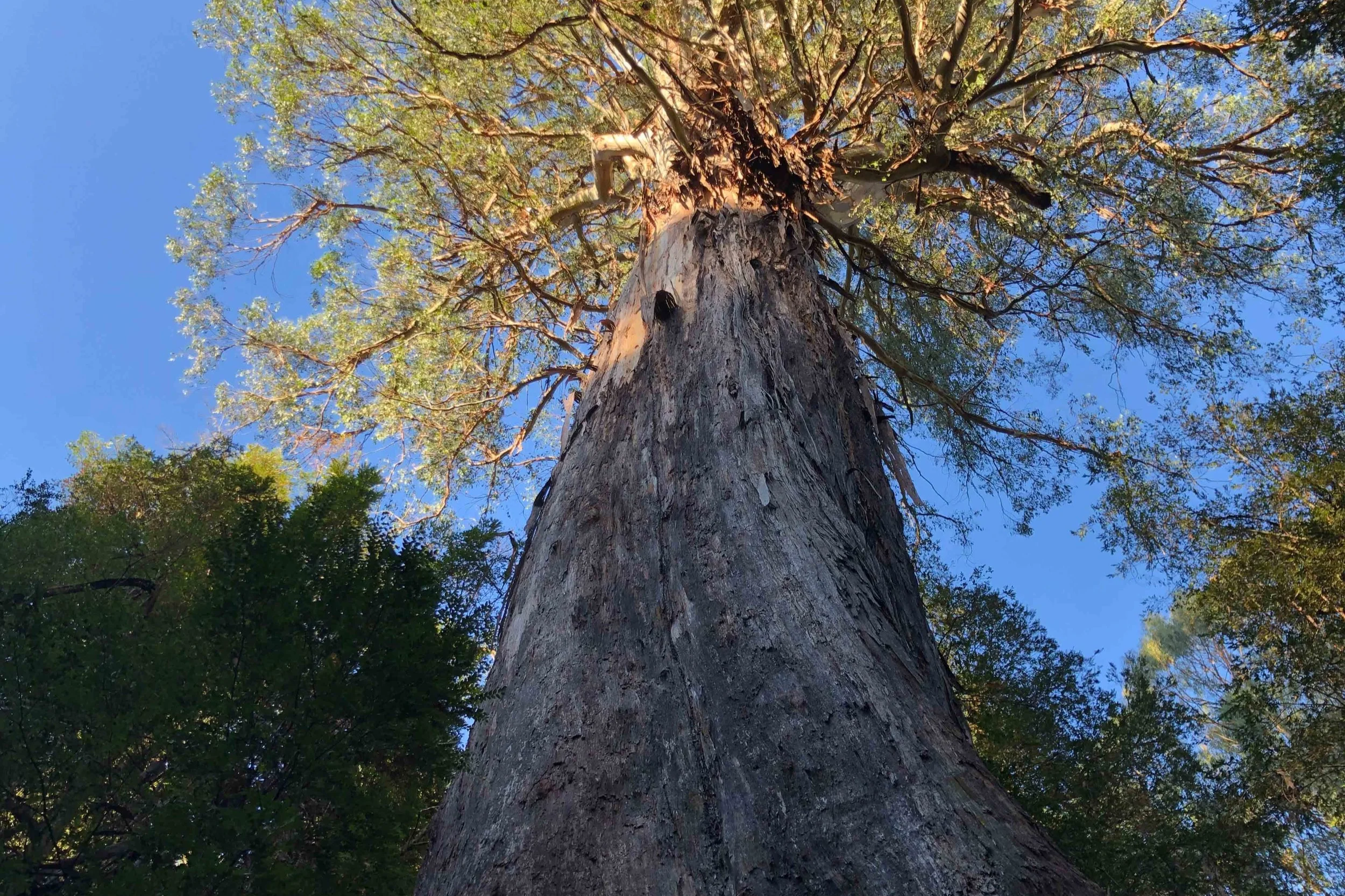
I had Ada to myself in all her glory. The little winding track, myrtle beech rainforest in the protected gully and the first rays of light catching the high canopy. The Ada Tree is not the tallest tree in Victoria, but it is a 400 year old giant from another time. It has survived fires, windstorms, pests and people. It’s about 75m high and weighs about 225 tonnes. It’s roots spread out over half an acre, talking to the other trees. The story goes that the loggers thought it had white ants, so they left it. Ada was a fried of the surveyor so she got a tree. It was impressive just hanging around for a while.
But I had a train to catch so I needed to get cracking. I wanted to get to Moe by 3.15 to catch the train to Bairnsdale. That would get me ahead of schedule and help at the other end. How hard could it be cruising down the hill? I cracked into my peanut butter supply, dipped slices of apple and glugged some more water. How thirsty is this riding?
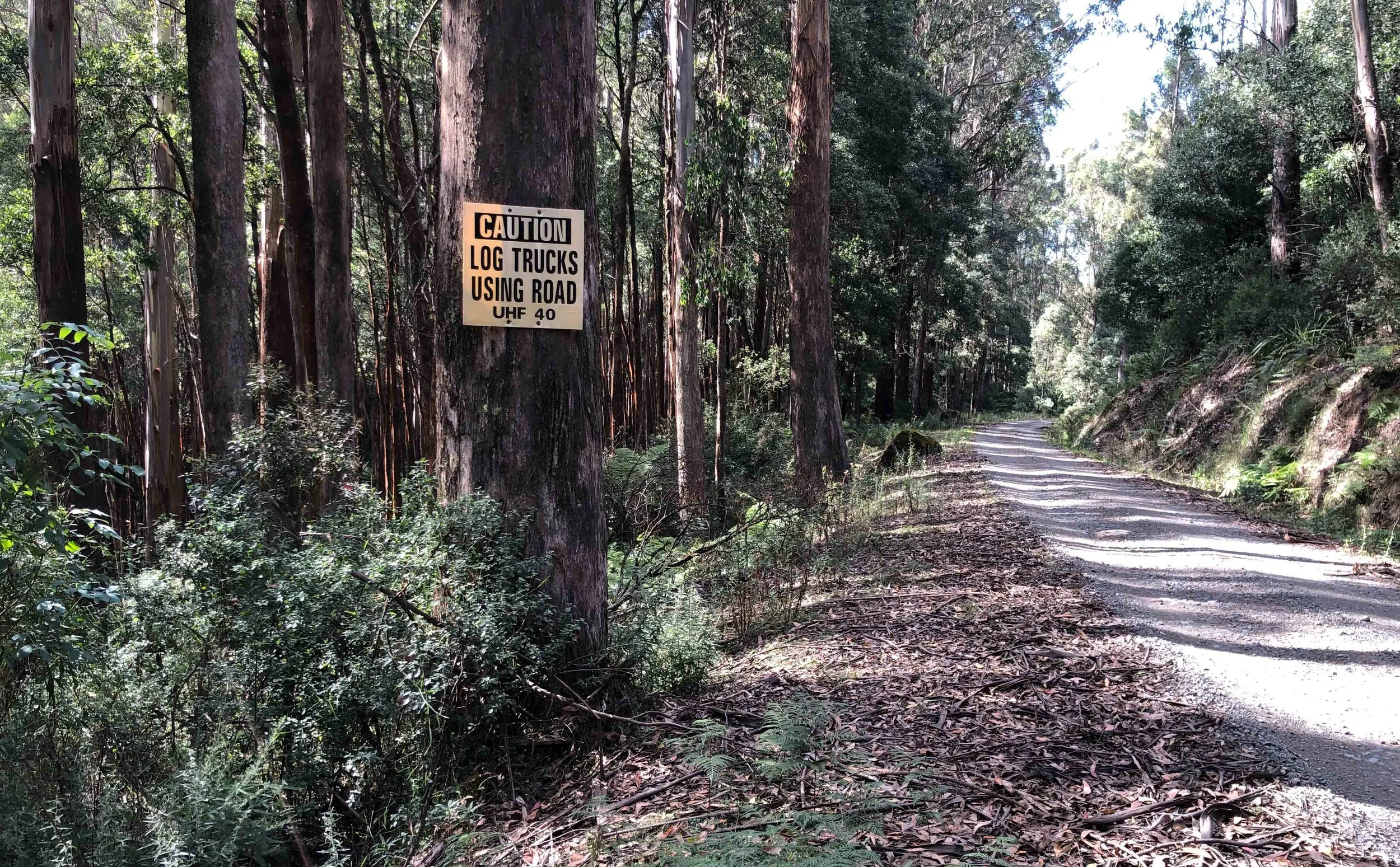
Into logging country! Turn on the radio!
Descending off the plateau there were more confusing junctions than I remembered online, but I managed to nose my way on to the McCarthy Spur Track and active logging country. I turned my phone on to channel 40. It’s quite jarring going from the Ada Tree and its sheltered rainforest pockets to coupes that are logged out, slashed and burned. Logging is such a confusing industry.
I do like all the toys to get the trees out, like tonka trucks in a giant sandpit. And the artistry of the design of all those tracks, which will one day settle and be a cyclist’s paradise. And I love that wood is our one truly replenishable resource. If we put giant beams in that building, will that mean one less tonne of death by concrete? And I do get that sense of familiarity of having worked in some forests during my uni years. I have an inkling of what a forester might see in that stand. The eye of the beholder.
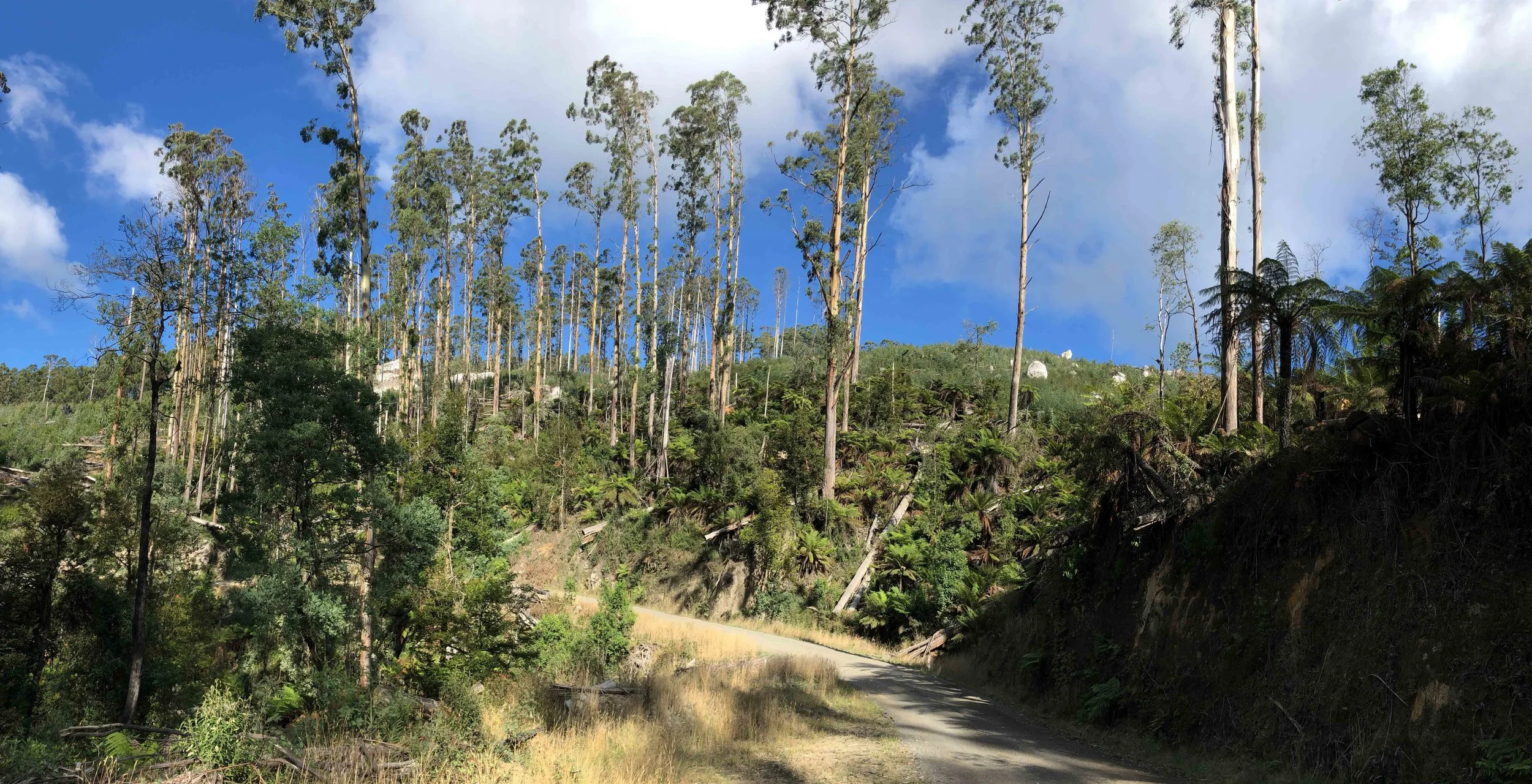
Recently logged coupe. Some trees have been left which one day could bear crucial hollows for critters.
And yet taking out the grand ash stands is highly disruptive. It takes decades for canopies to fill out and undergrowth to clear out. It takes even longer for hollows to form in the granddaddies of the forest. All the critters that need those hollows are endangered, not least the leadbeaters possum. We are losing the battle to maintain the integrity of these systems. It’s more than enough to overwhelm any warm foresty feelings.
When I think about the big picture Australia imports much more wood than it exports. More than double. Where is all this timber coming from? If we closed off all of our great forests tomorrow, will Indonesia cop it in the neck? It seems our plantation estate is missing in action. Farming trees, like food, is much more efficient and can be selectively harvested more easily, especially in less rugged and drier terrain, rather than the stark emptiness of clearfelling. But our plantation estate has stagnated and is even falling. Could we have more high value forests in national parks and build our plantation estate? Yes we can.
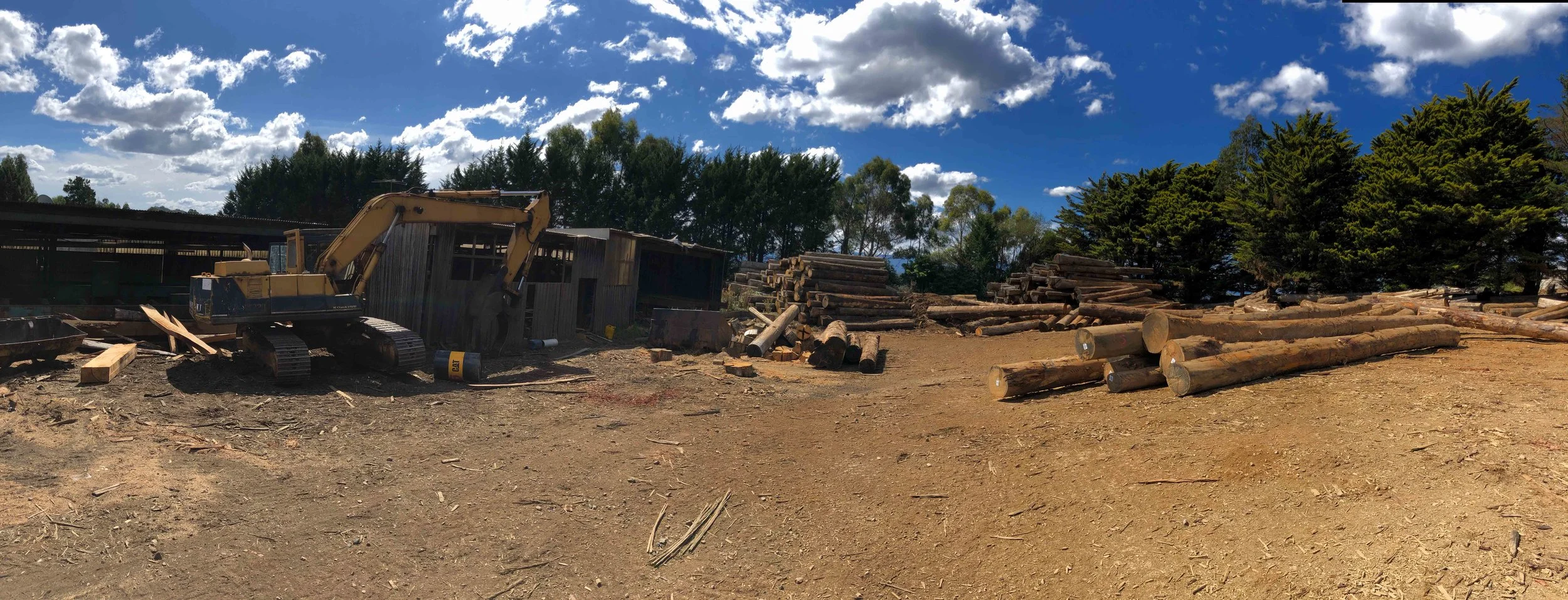
Big toys and timber yards outside Noojee.
The McCarthy Spur Track is a glorious descent through regrowing stands of the star gazing ash, the textured stringybarks and the climbing cherry trees of my youth. The stark coupes are quickly forgotten. The track extends on and on at a gentle grade, winding its way down and down towards the valley floor. There are so many rosellas I had a yearning for tomato soup. The valley air was thick and the heat sticky and hot. I was out of water.
Noojee. An old gold dig turned forest town, the town was destroyed by fire in 1926 and again in the Black Friday fires of 1939. The forest tramway network extends right to the doorstep of the town. Noojoo is an Aboriginal word meaning ‘place of rest’ and I found that at the Little Red Duck Cafe. I established my pattern of all you can eat breakfast, phone charge and drink till I was the michelin man. Excitedly waiting for my fat and protein fill, I skulled a whole bottle of water and watched the utes and trout fisherman ambling past.
……
The science of a system like the earth is super complex - including all the circulating gases and butterfly flaps is no small feat. But here’s a secret: the science of climate change is super simple.
Plenty of scientists were catching on to the greenhouse effect - Eunice Foote in 1856, Joseph Fourier in 1824 and even Alexander von Humboldt in 1800 with his observations of land clearing in South America - but I think the greatest act of climate genius goes to Svante Arrhenius, a Swedish chemist.
Arrhenius was looking at the brightness of infrared light coming from the moon. And he noticed an astonishing thing: the brightness of spooky moonlight changed depending on the angle of the moon. When the moon was overhead, the moonlight was brighter, when it was close to the horizon, the spooky moonlight was dimmer. Building on the work of earlier scientists, Arrhenius cottoned on that infrared moonlight (not visible moonlight) was being absorbed by carbon dioxide in the earth atmosphere.
Then comes the genius: the same as the moon gives off heat as infrared radiation, Arrhenius could see that that spooky earthlight would also be absorbed by carbon dioxide in the same way as he had just observed for the moon. Arrhenius sat down for 2 painstaking years with pencil and paper to work out what the temperature change would be on earth if you doubled the amount of carbon dioxide in the air (known as the climate sensitivity). Taking account of all the different surface types and temperatures, Arrhenius finally worked out that with this thicker blanket the temperature would rise 4 to 6 C. At the conclusion of this epic he remarked “I should certainly not have undertaken these tedious calculations if an extraordinary interest had not been attached to them”. It was 1897. Arrhenius worked all this out just looking at the moon.
Fast forward 120 years, and with the benefit of all of our incredible computing power and thousands of scientists analysing this problem, the latest compilation study of all our independent and competing climate models suggests the climate sensitivity is 3 to 6 C. Arrhenius, I salute thee.
So while the science of what happens inside the bubble of the earth is really complex, the big picture is not: put a blanket on the earth and it heats up. What is amazing is that the science of the greenhouse effect is so strong and accepted, that no climate denial meme ever attacks it.
So far, we’ve added about 1/3 more carbon dioxide to the air, and temperature has gone up about 1 C so the prediction is tracking pretty well (especially when you consider the earth hasn’t fully warmed up yet from the cosy blanket).
So if we want to fix this problem, we need to stop putting carbon dioxide and other greenhouse gases in the air. This sounds easy enough, but practically everything we do pumps out this stuff. To get an idea of the scale of the problem, if we want to have a good chance of keeping the temperature rise to less than 2 C, we need to reduce emissions by 10% per year, every year. By comparison, following the global financial crisis, in 2009 emissions dropped by about 1% and people went bananas. 10% reductions is really, really hard. We would probably all have to turn into cockroaches.
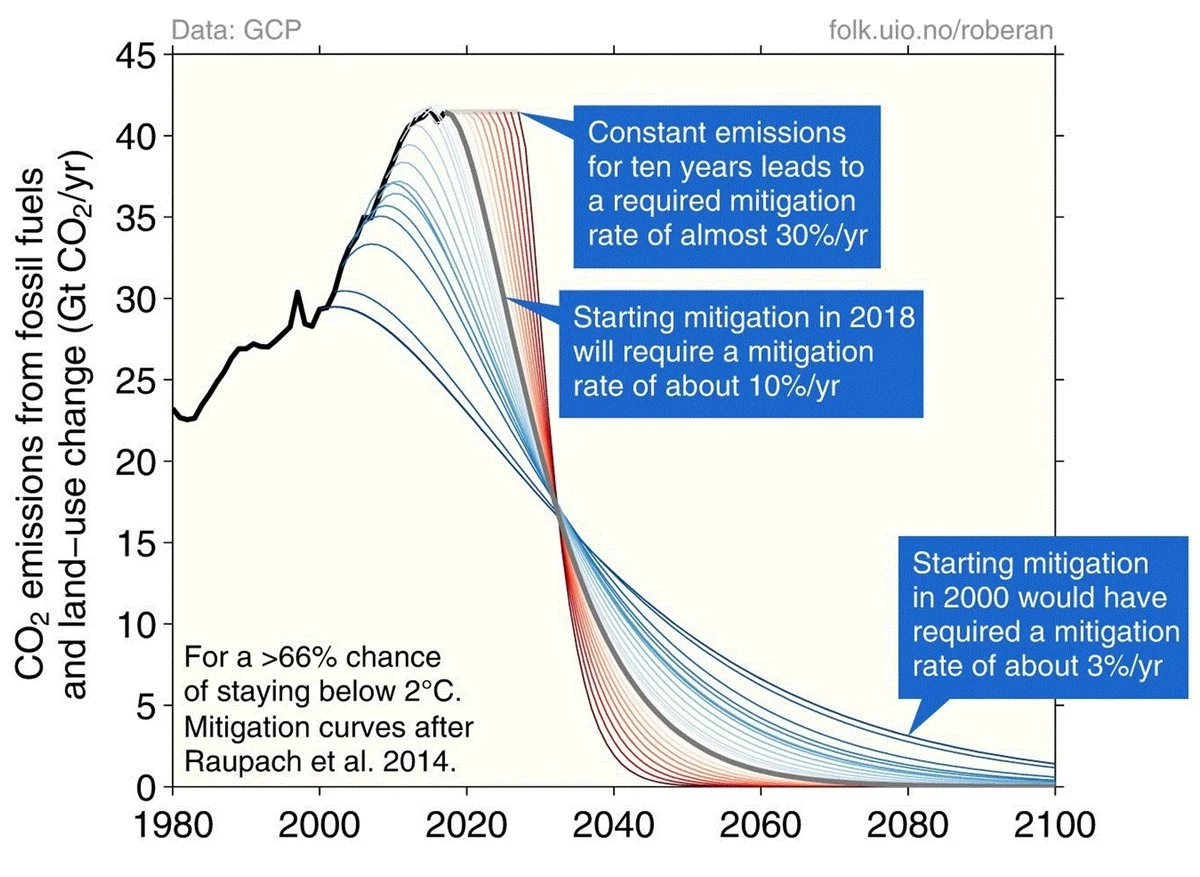
The emissions challenge: to have a 2/3 chance of staying below 2C, we need to get cracking.
I wanted to make a few short notes on the science for two reasons. One, I don’t think the basics are understood very well. And two, understanding the science has been crucial to many skeptics converting. It’s much harder to hold a crazy position if you really understand the truth.
Conventionally, trying to talk to skeptics has been considered a waste of time. A committed majority of supporters could easily overwhelm the holdouts. But I’m starting to think that is a mistake. I’m not alone. When you think back on the politics and power plays of the last 20 years in Australia, those contrarians are always close at hand, exerting their disproportionate influence. I’ve made a loungeroom recording of a song on the topic, thus proving why scientific songs have never done very well.
Way back in 2010, Institute of Public Affairs (a conservative think tank in Melbourne) executive director John Roskam told the Sydney Morning Herald, “Of all the serious sceptics in Australia, we have helped and supported just about all of them.” He is still there. Recent court documents from a family spat tell us that Gina Rinehart’s Hancock Prospecting donated $4.5 million to the IPA in 2016 and 2017, about half of its income.
Could the IPA could spread its disinformation if no one was listening?
………
Out of Noojee a hot flush of hill stood before me. Oh man, I am pretty sure that hill didn’t show up on the profile. I waded in, dropping to the granny gear and grinding away. Time for rescue by The Elephant podcast, with Kevin Anderson, my favourite climate scientist. Kevin is a rare beast, a truth teller, but also an inspiration. It’s so refreshing to hear someone just say it like it is. Kevin’s talking about the “Unforgiving Math of 2 Degrees” and he makes an interesting point: when we think about renewables, it’s not just replacing the grid, we have to actually replace the grid 3-5 times over if we want to electrify everything including transport and hot water.
Not sure if it was Kevin electrifying or heat intensifying, but the sweat was pouring. I could feel the little leg gremlins tightening in the calves, salt running into the eyes. The cars were zooming by. I was heavy, heavy, heaving. I was really irritated. Time was melting away and that train seemed very far. Old man fatigue, where are you, give us a hug.
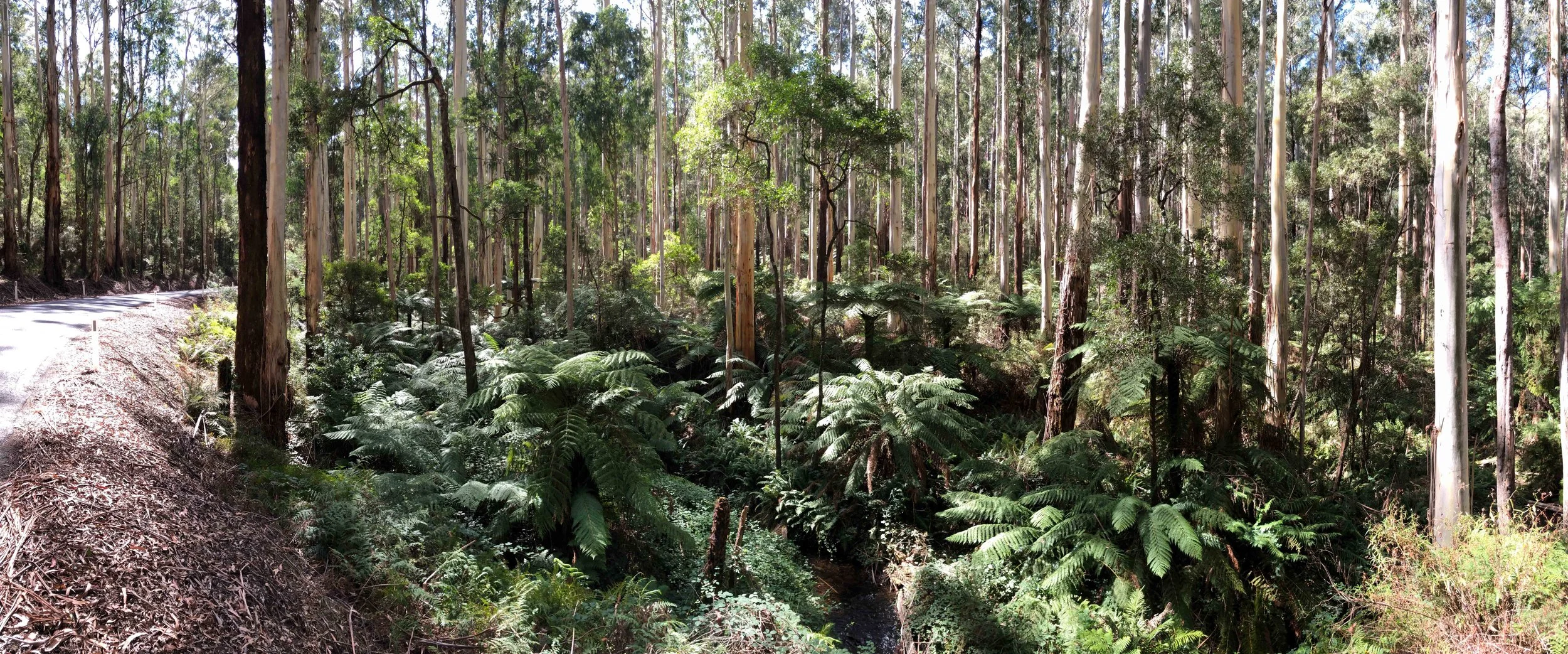
Descending to Moe on the wonderful Willow Grove Rd.
Eventually, I toppled over that sharp climb and zoomed down into the Icy Creek valley. A quick right turn and it was a gentle meander down Willow Grove Rd - I sometimes dream of connecting up all these great cycling roads in one giant tour - replete with shady regrowth and cooling groves of tree ferns. I stopped at one grove with 3 and 4 metre tree ferns and wondered at the grandeur or gullies this like before everything changed. Gradually we are tending these areas a little better.
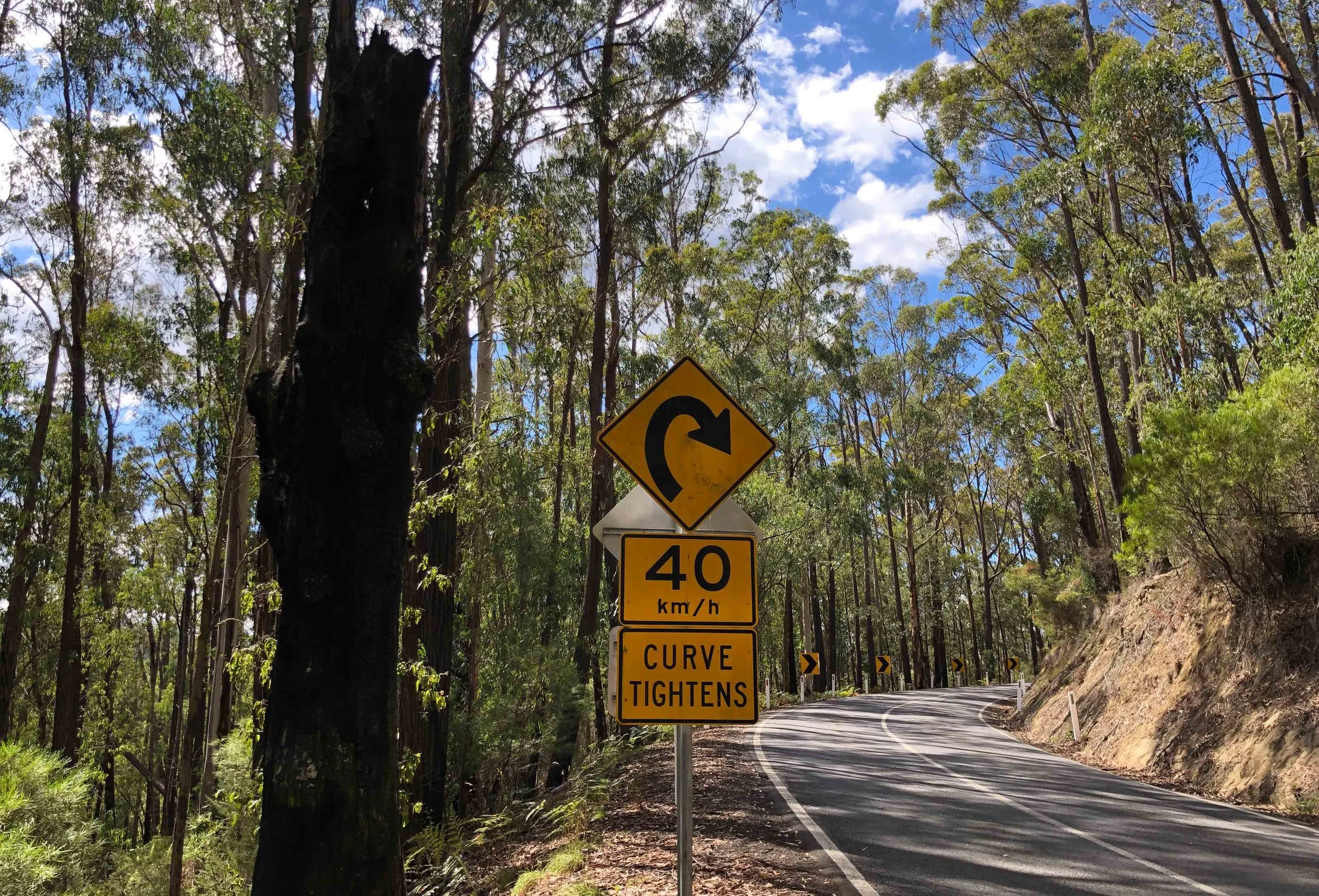
Tight corners so the cars can’t go fast!
I settled into the race for the train, with the slope at my back and the wind at my front. It was another heat sapping over 30 day, with bizarre warm gusts coming from the south east. Surely a change is coming? I tried to keep drinking, tried to keep afloat, but I could feel myself sinking. Sinking into the arms of old man fatigue. Maybe this ride was too much for me?
Suddenly, I spotted Mrs Echidna beside the road, slurping for ants! Immediately my mood lifted, seeing that little friendly waddle and spikes jerking up and down. I parked my bike and walked back for a muesli bar break. As soon as Mrs Echidna saw me, she dug her nose into the ground and prayed I would go away. I did not. I sat there slowly chewing one muesli bar and then the next, waiting for tiny shoots of energy to return to my body. After an eternity, Mrs Echidna popped up her head, pausing briefly for a photo before resuming her blindfold. Echidnas are easier to photograph than swamp wallabies darting across the road. I had all the energy I needed and was on my way.
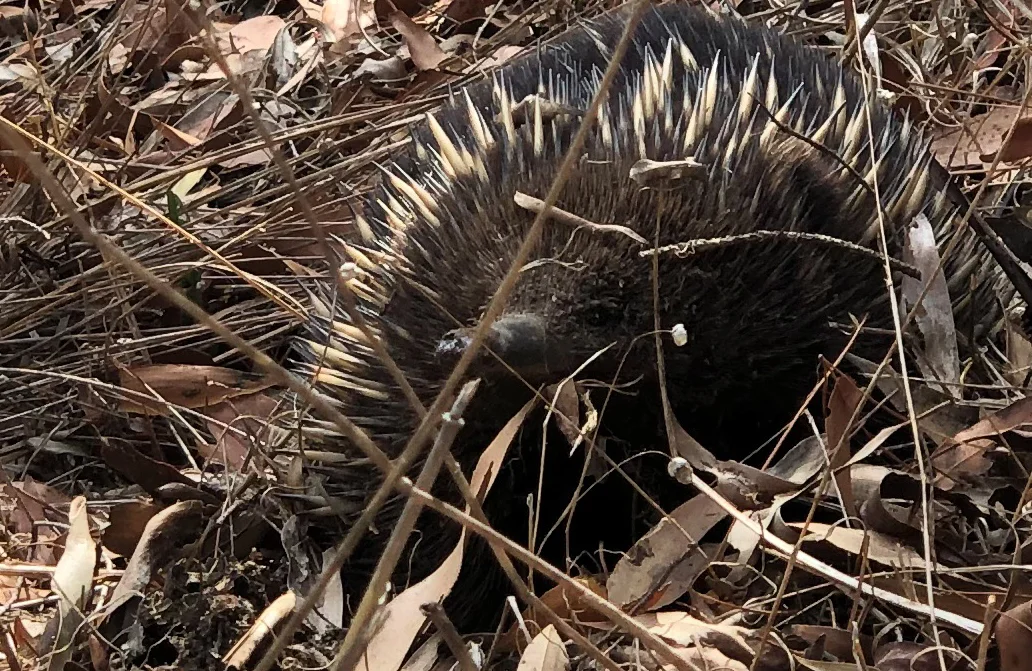
Ah Mrs Echidna. Australia’s most widely distributed marsupial.
The great forests behind me, the plains opened up revealing the brown Gippsland plains of a very dry summer. Bare paddocks and sheep lying down, still waiting for the autumn break. Plenty of flies and heat without the shelter of those trees. Just keep the pedals rolling. As I got closer to Moe, the reminders of Victoria’s power source loomed larger, giant Star Wars electricity walkers draped across the road and hazy coal holes shimmering in the distance. One was for Yallourn, the town they moved and turned into a brown coal pit in the 1980s. Imagine trying to do that now? I saw my first cyclist since leaving the rail trail the day before. In fact a whole bunch of cyclists. I must have looked pretty shaky - the lead guy asked if I was all right and needed a hand. I put on my best C4C smile and pedalled on.
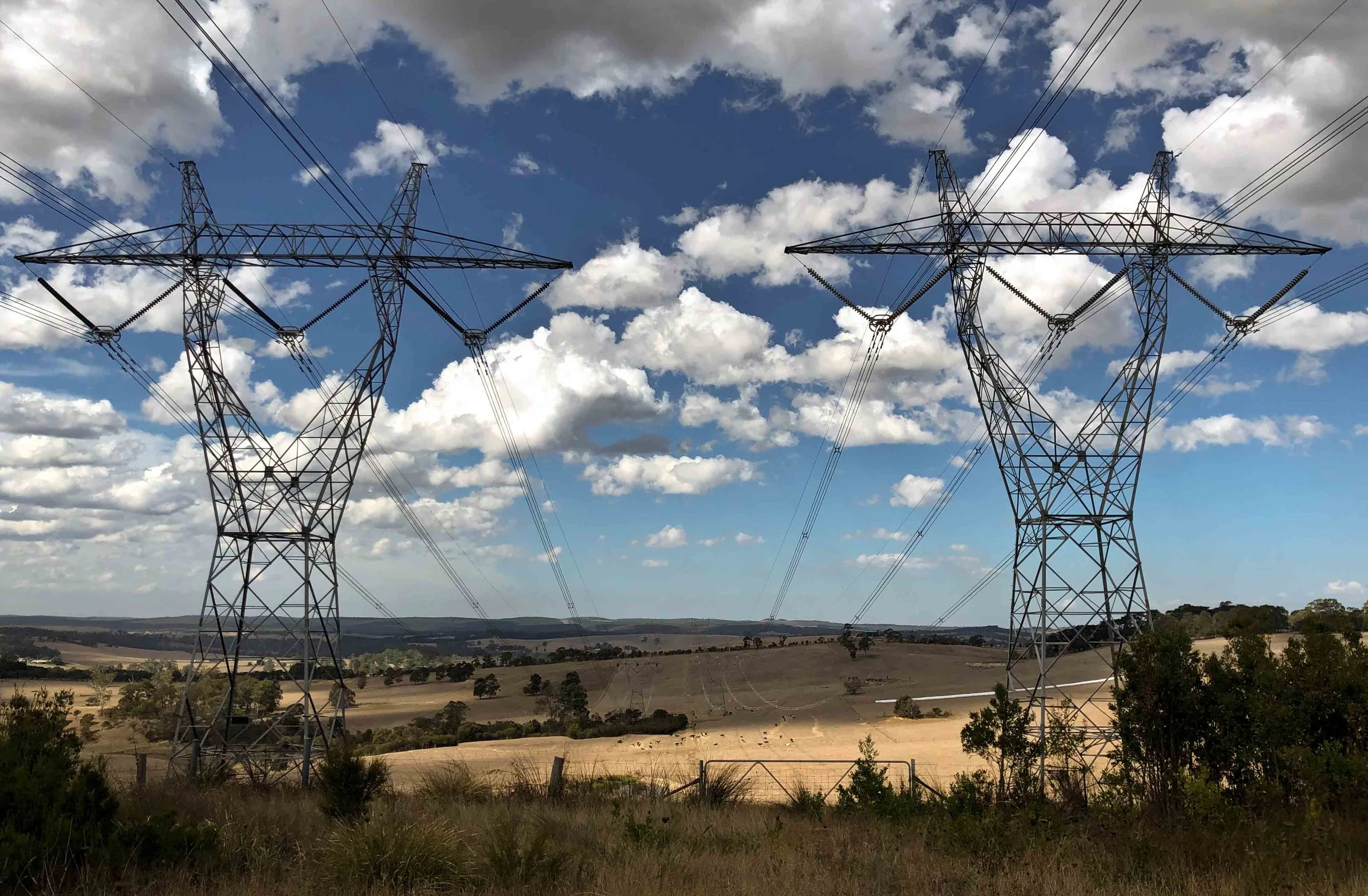
Star Wars electricity walkers, taking our power to the city.
Moe. I finally reached the roundabout on the outskirts and turned into town. I lifted my pace with the racy town traffic. Was there any chance? I pulled up at the station at 3.35, not a soul in sight. I asked if the train had come. ‘Sure thing, it came 20 minutes ago.’ Damn, it was on time. Due to track works the next train was not until after 8, getting into Bairnsdale at 10.30. Grrrr. #straya
Clicking into survival mode, I spotted a motel across from the station, and checked into that 60s yellow brick style. I mustered some conversation energy. ‘Been a busy summer,’ she said, as I looked at the empty carpark. ‘But a bit quieter now.’ I took the key for room 1. I rode straight to the supermarket and parked lockless right inside, got salty supplies and went back to the motel. At least I could wash all my clothes and me and rest until the 9.30 train the following morning. I was safe now.
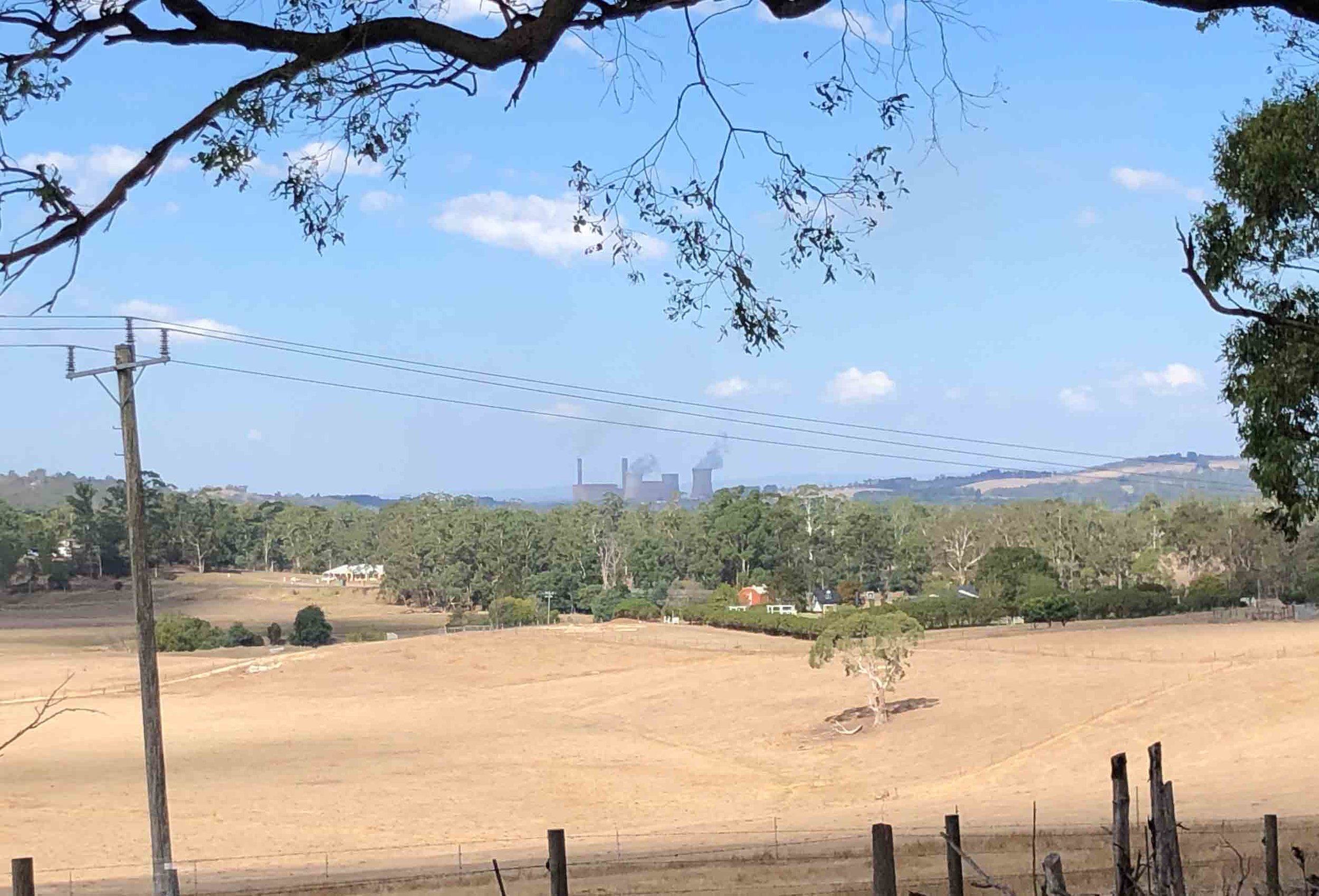
Approaching Moe with the Yallourn power station humming ominously.